Kohlert Model 1930 (Part I)
I bought a "cat in the sack" Kohlert saxophone on Tradera. The serial number (230476) identified it as a Kohlert Model 1930 made in 1930.
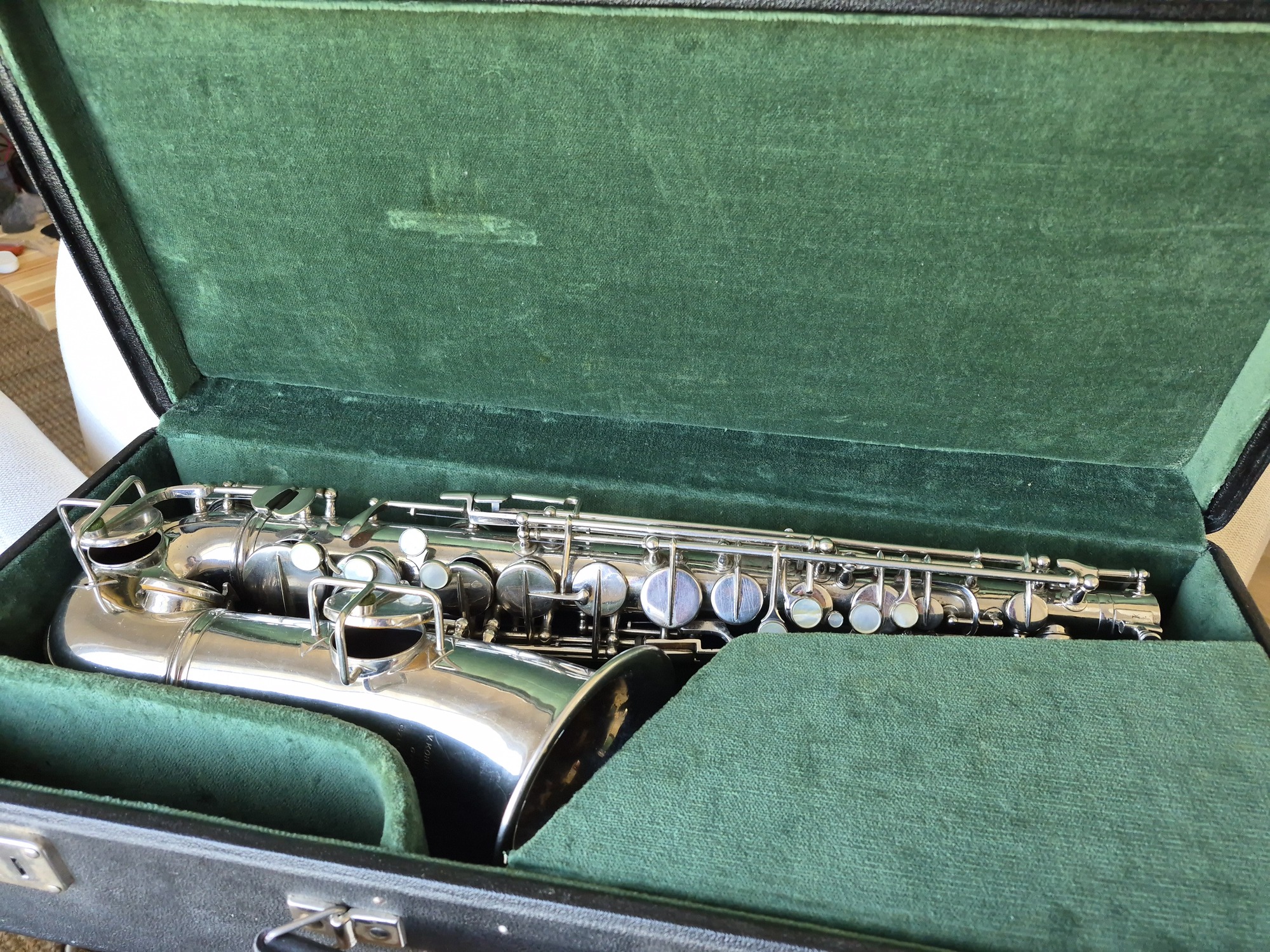
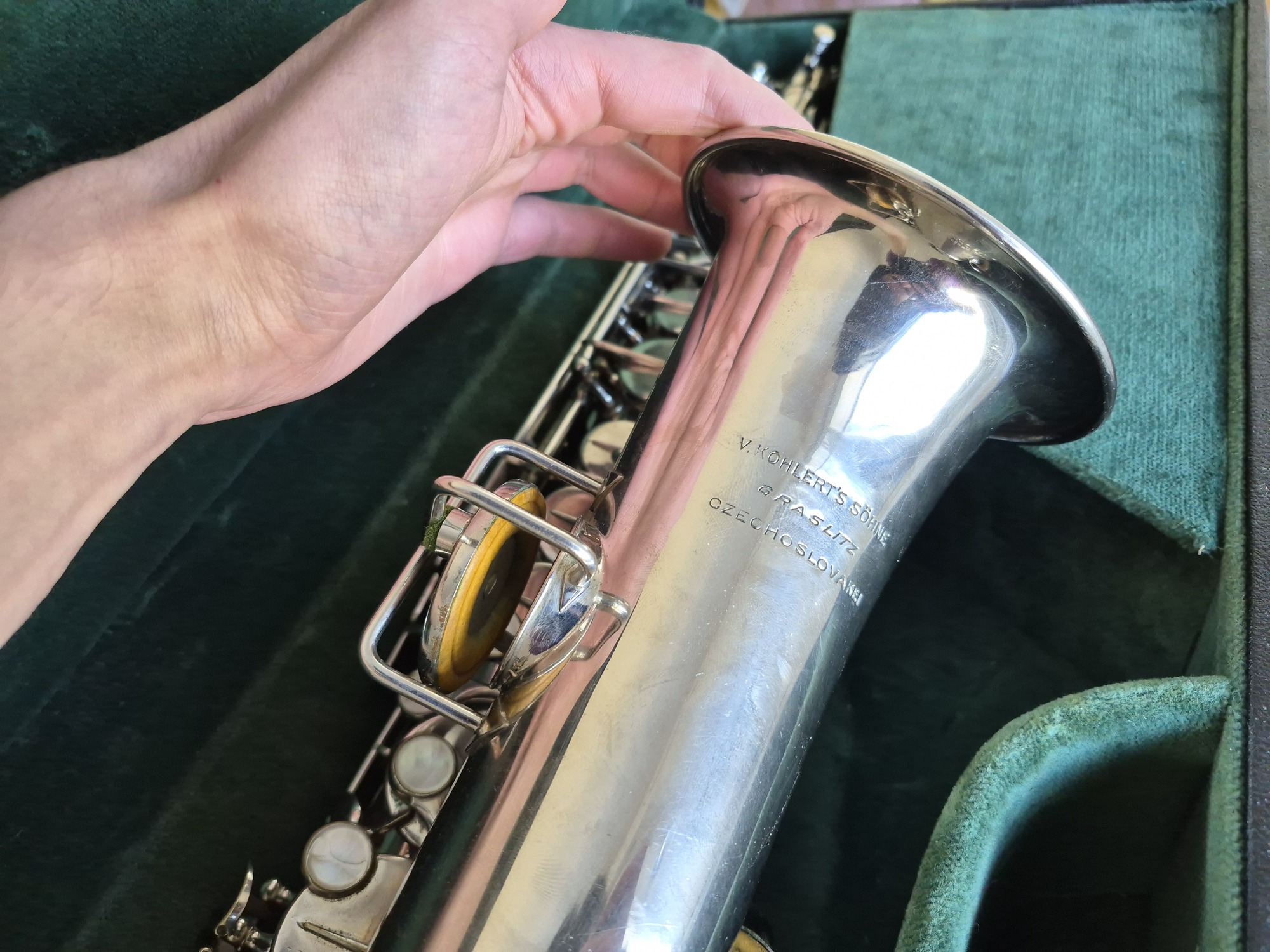
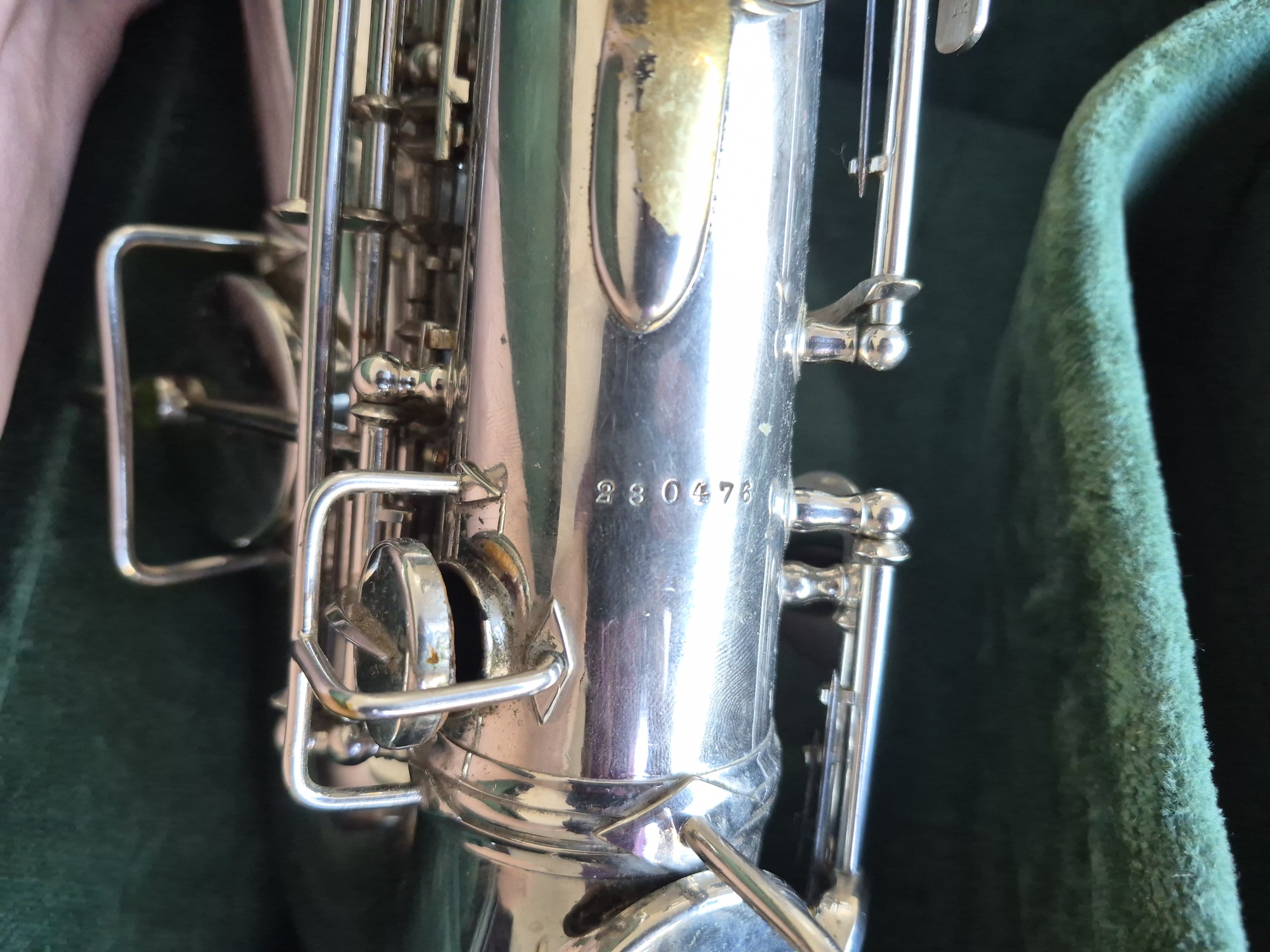
The condition
Overall, it appeared to be in good condition and could play a C major scale (this was as far as I had got in actually playing it). Some key pads were sticking. There was a bit of oxidisation over the keys and on the ligature. The microtuner ring wasn't turning.
The microtuner
The neck featured a microtuner. When turned, the microtuner is supposed to lengthen or shorten the neck, but it was only rotating about 15 degrees without affecting the neckpipe. Whatever kept it stuck needed to be cleared.
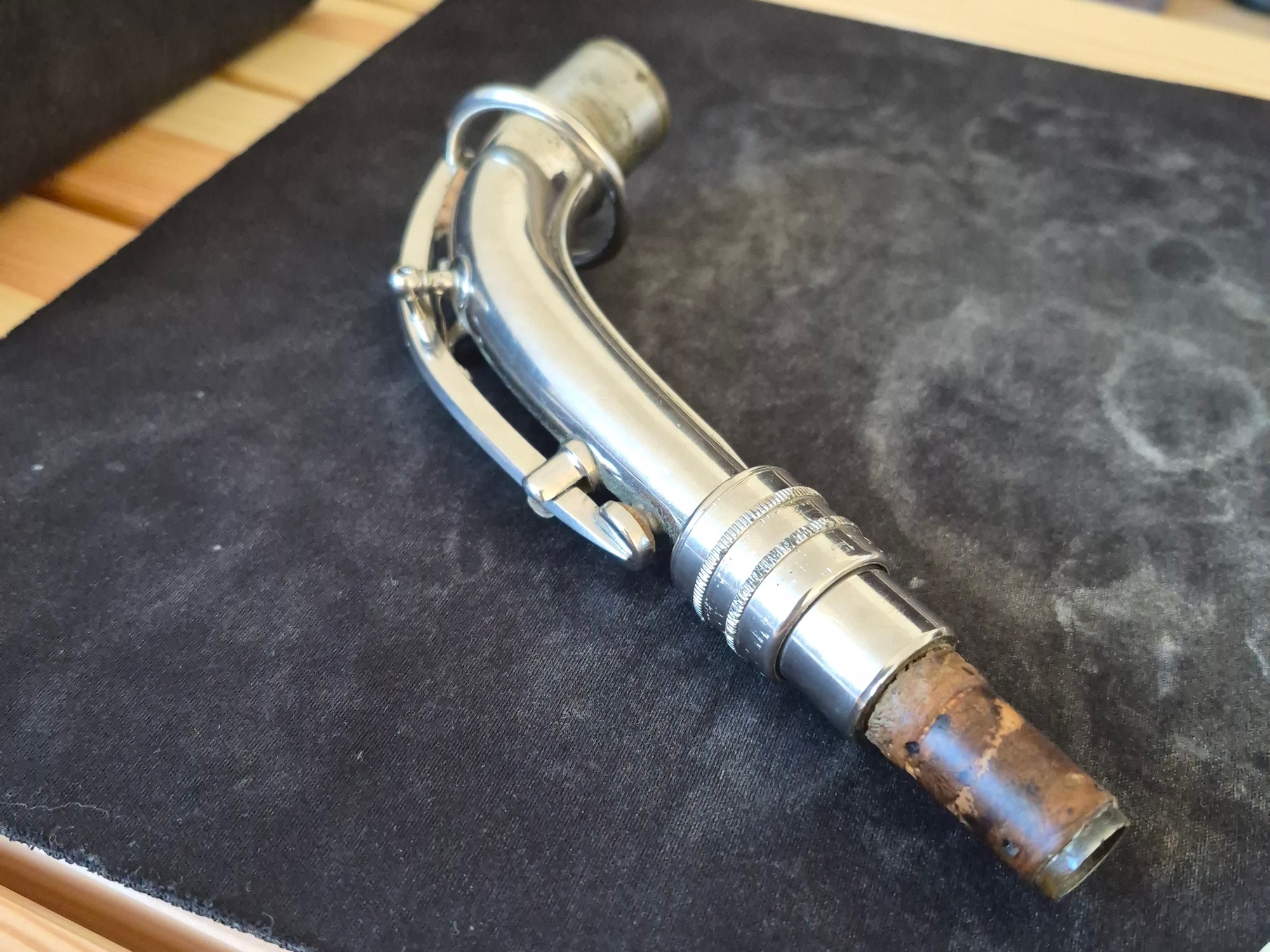
The knurling on the adjustment ring looked chewed, as if someone had tried to force it unstuck with pliers. I hoped the threading wasn't damaged. After I sprayed the inner parts of the ring with MuckOff-94 lubricant and left it overnight, I managed to rotate the ring and slide the tuner out about 5mm. After that, however, it started to rotate freely, stopping short of a full turn. I could feel a small resistance, then it jumped a thread, and freely rotated another turn, on repeat.
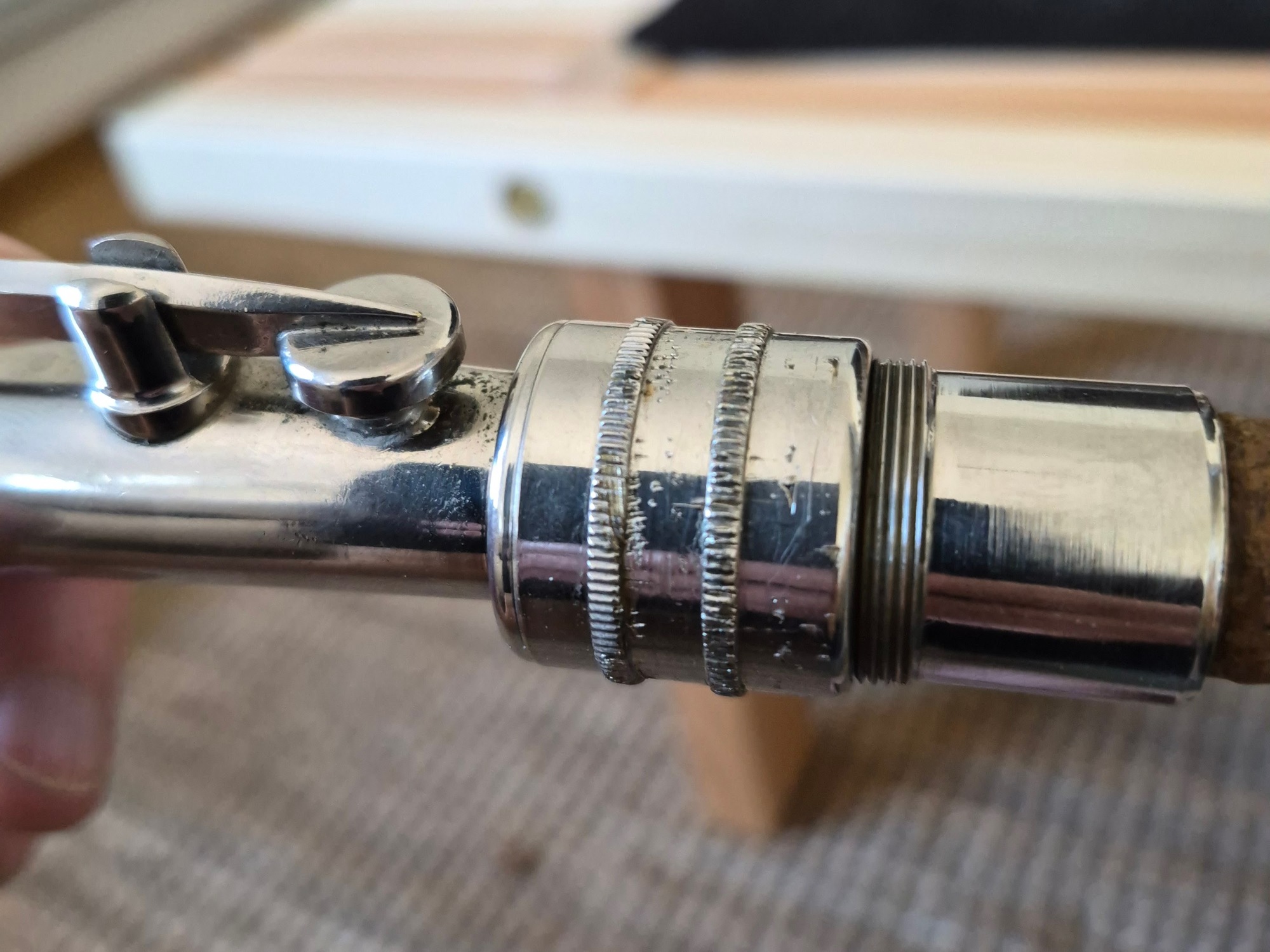
Pushing the tube in while turning the ring to attempt to slide the tube back in appeared to cause the threads to catch again, becoming stuck. I needed to clean the debris out somehow.
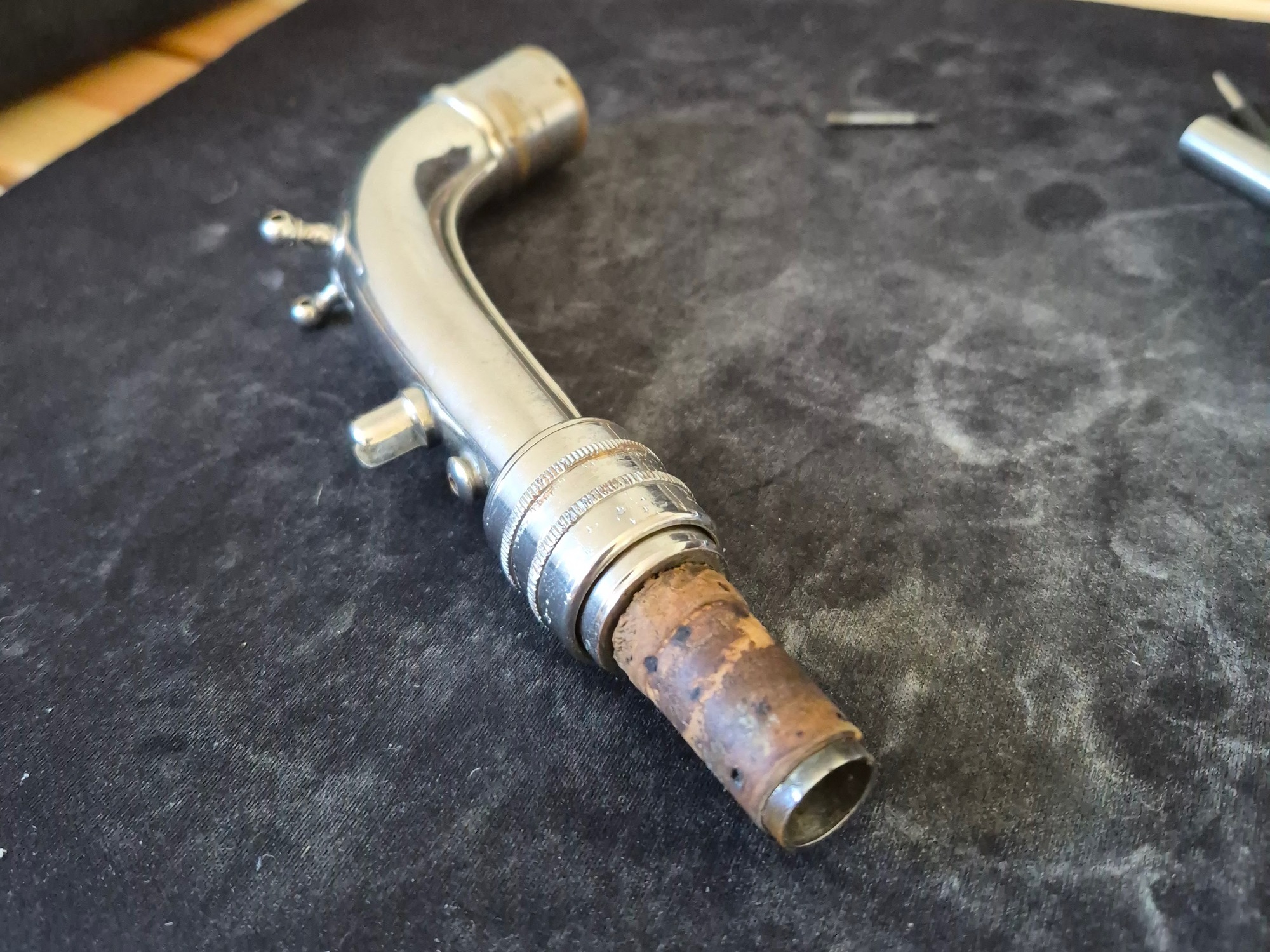
To make working on the neck easier, I decided to remove the octave key. The screw holding the key in place was also stuck and looked slightly marred. Pressing the screwdriver hard into the screw, I got it out. Cleaning and greasing should help with future maintenance work.
Back to the ring. Heating the ring up and trying the push-and-turn method again made it catch the thread. Turning the tube in and carefully applying the acetic acid to the threads through a syringe allowed me to turn the tuner into a fully "folded" position.
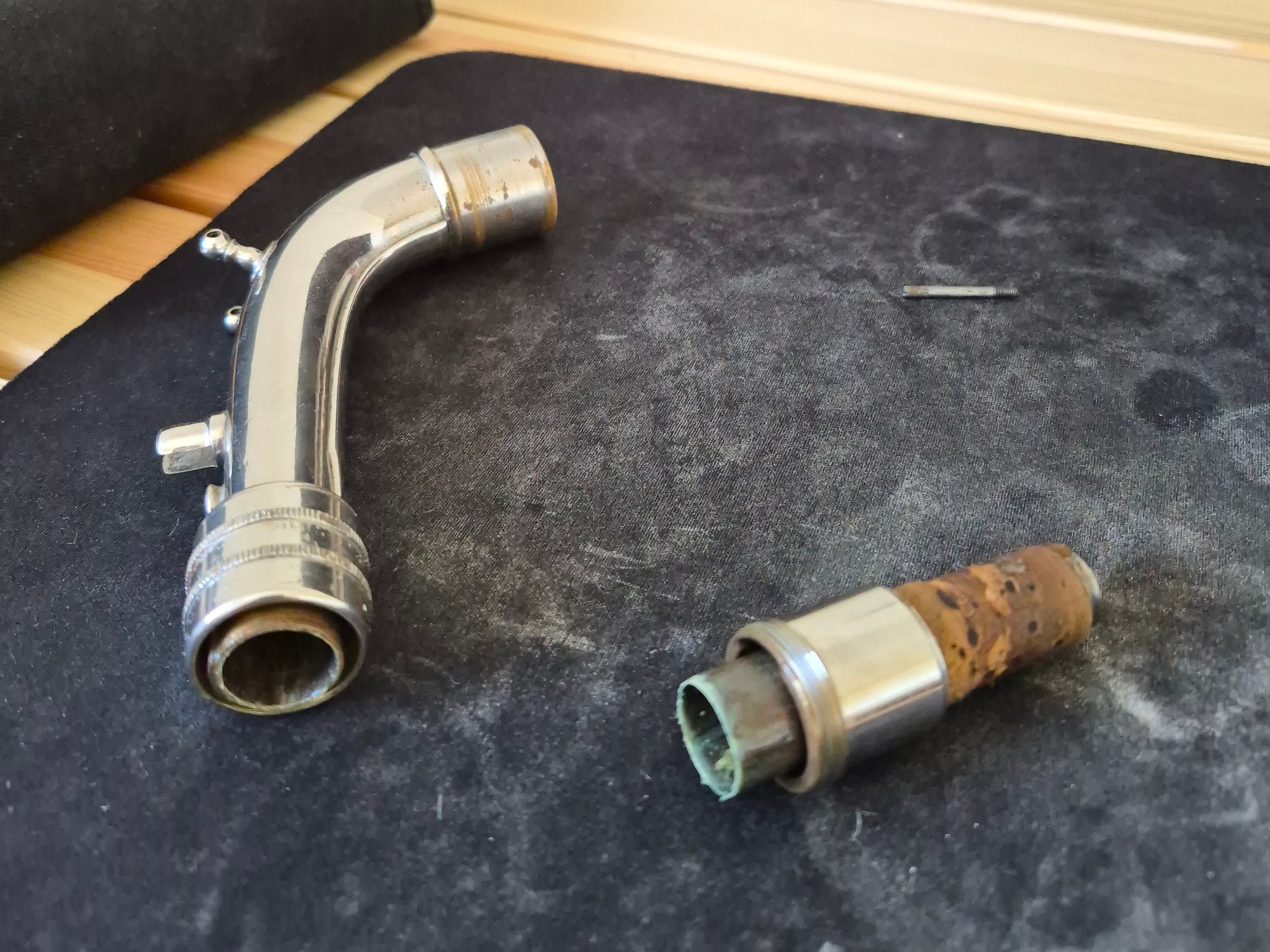
I tried to slide the tuner out again. This time, after a bit of a pull, the parts came apart, revealing old grease mixed with verdigris on the tube.
Flossing the threads on the tube revealed the chewed "tooth" at the very end.
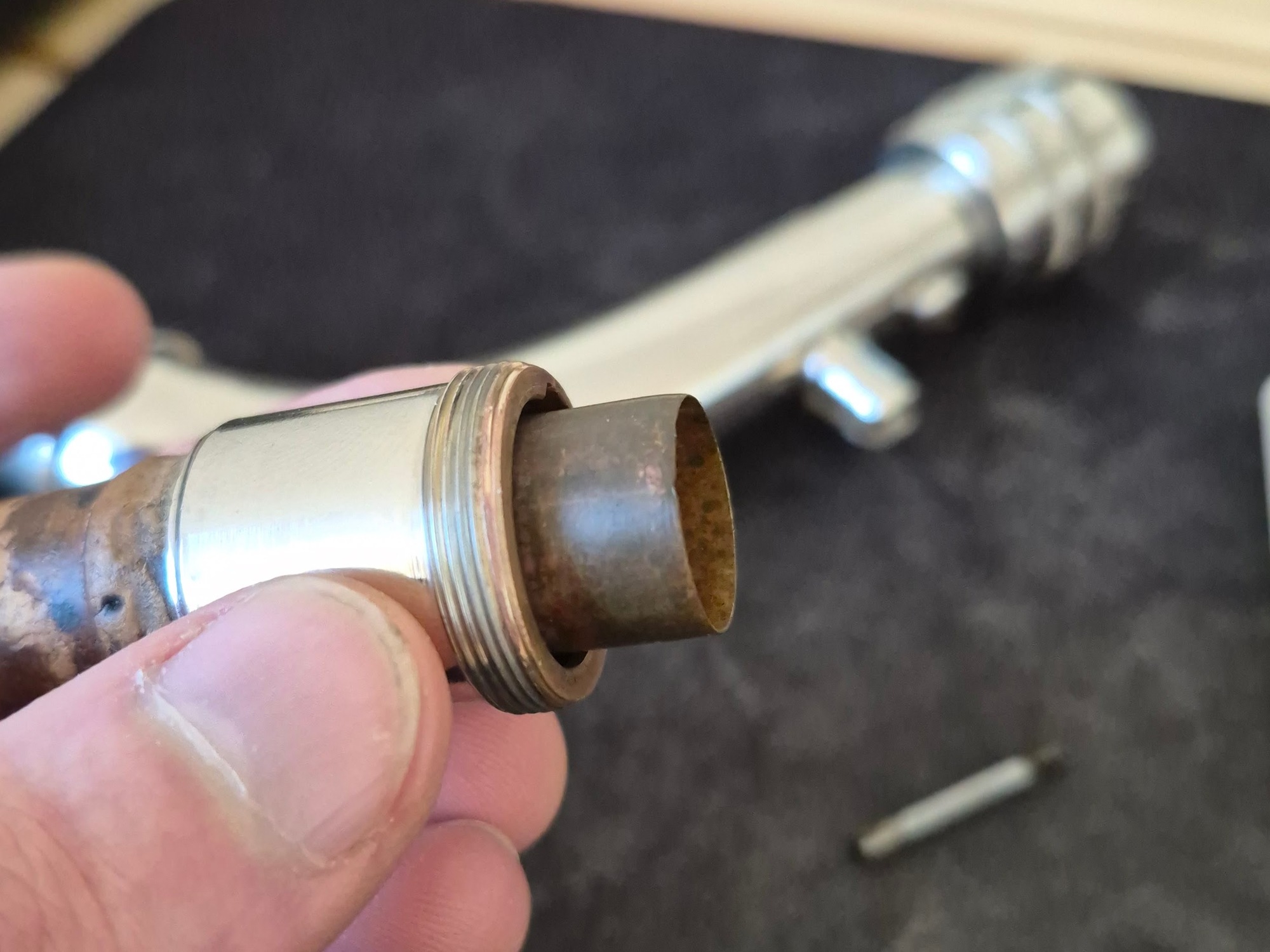
After the cleaning, the assembly functioned as expected. The next step was to grease the threads and the sides of the inner and outer tubes which are touching. Shopping was in order. I went for J. Meinlschmidt Nr. 15 Spacefiller for these pieces and the screws. I also added Nr. 13.5 to use on the rest of the instrument while I was at it.
The mouthpiece
The mouthpiece was of brownish black colour overall. However, the bottom sixth part of it was dark green. This kind of colour change is common to hard rubber, a material obtained via sulfur vulcanisation of natural rubber, as I had learned. That part wasn't covered by the cap and was possibly exposed to light for a prolonged period of time. This had led to sulfur migrating to the surface and changing the colour of the mouthpiece. The lower part still felt smooth to the touch, indicating that the oxidisation was superficial.
I gently washed it with cold water and applied a bit of olive oil to make it shine. Wiped clean with a paper towel.
The ligature
Soaking the ligature and its screws in acetic acid removed most of the verdigris. Brushing with sodium bicarbonate removed the rest.
After drying it off, I reassembled the piece. I planned to apply JM Nr. 13.5 once it arrived.