Kohlert Model 1930 (Part II)
The cork on the neck looked compressed, leaving the mouthpiece loose when fitted. I unscrewed the neckpipe from the rest of the neck to make the process easier.
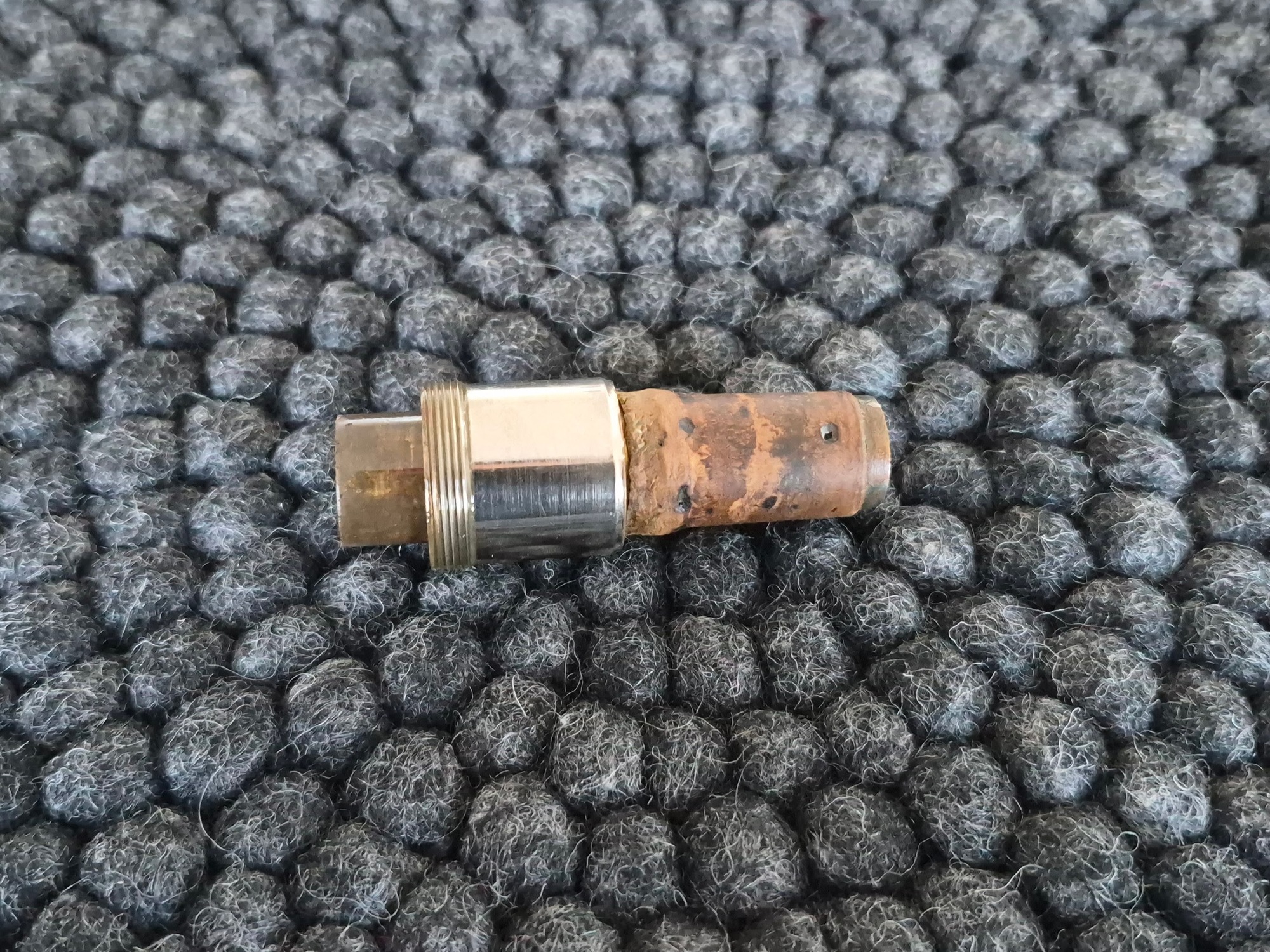
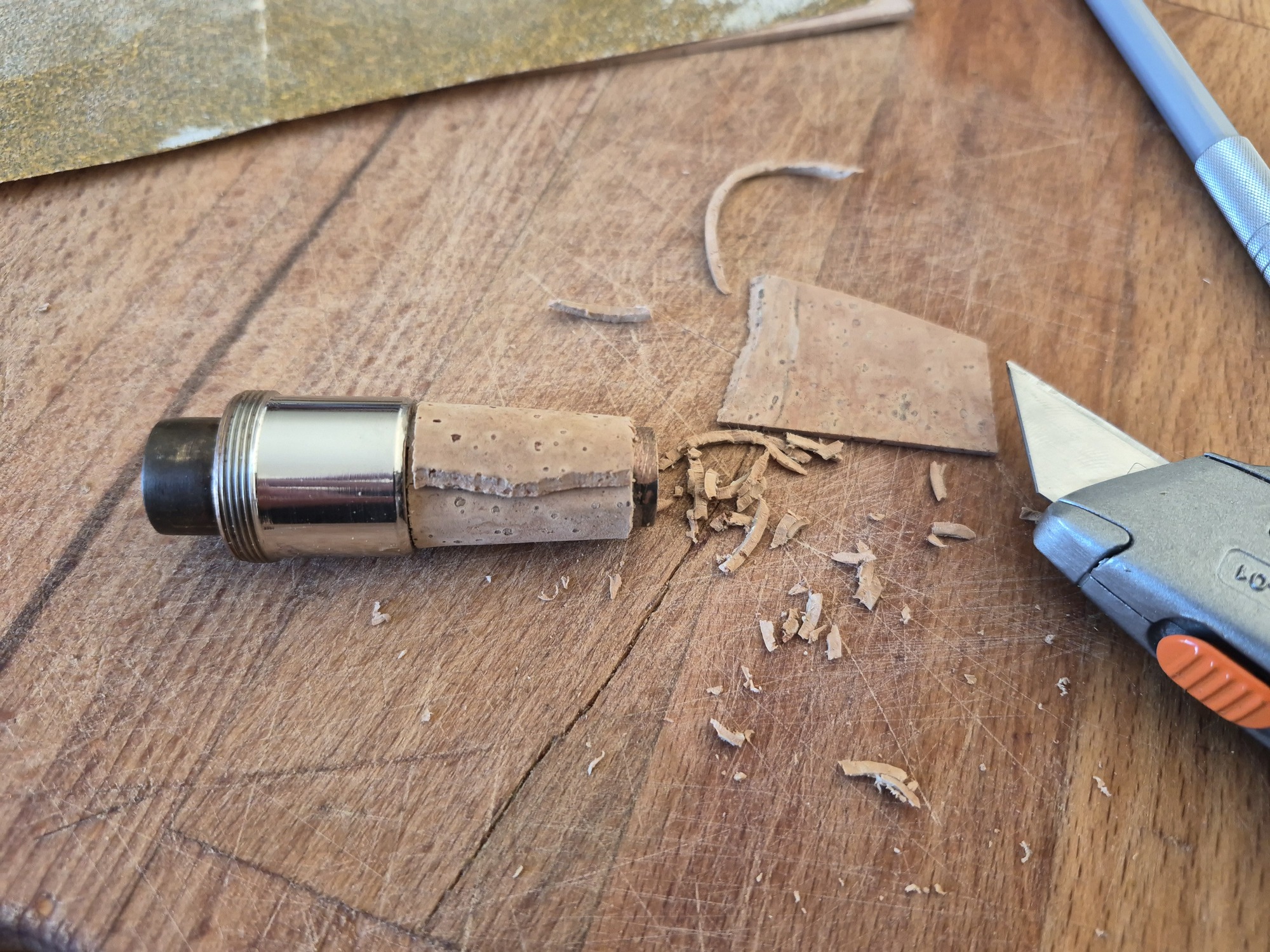
With a utility knife, I started slicing off pieces of the cork while trying to avoid scratching the pipe.
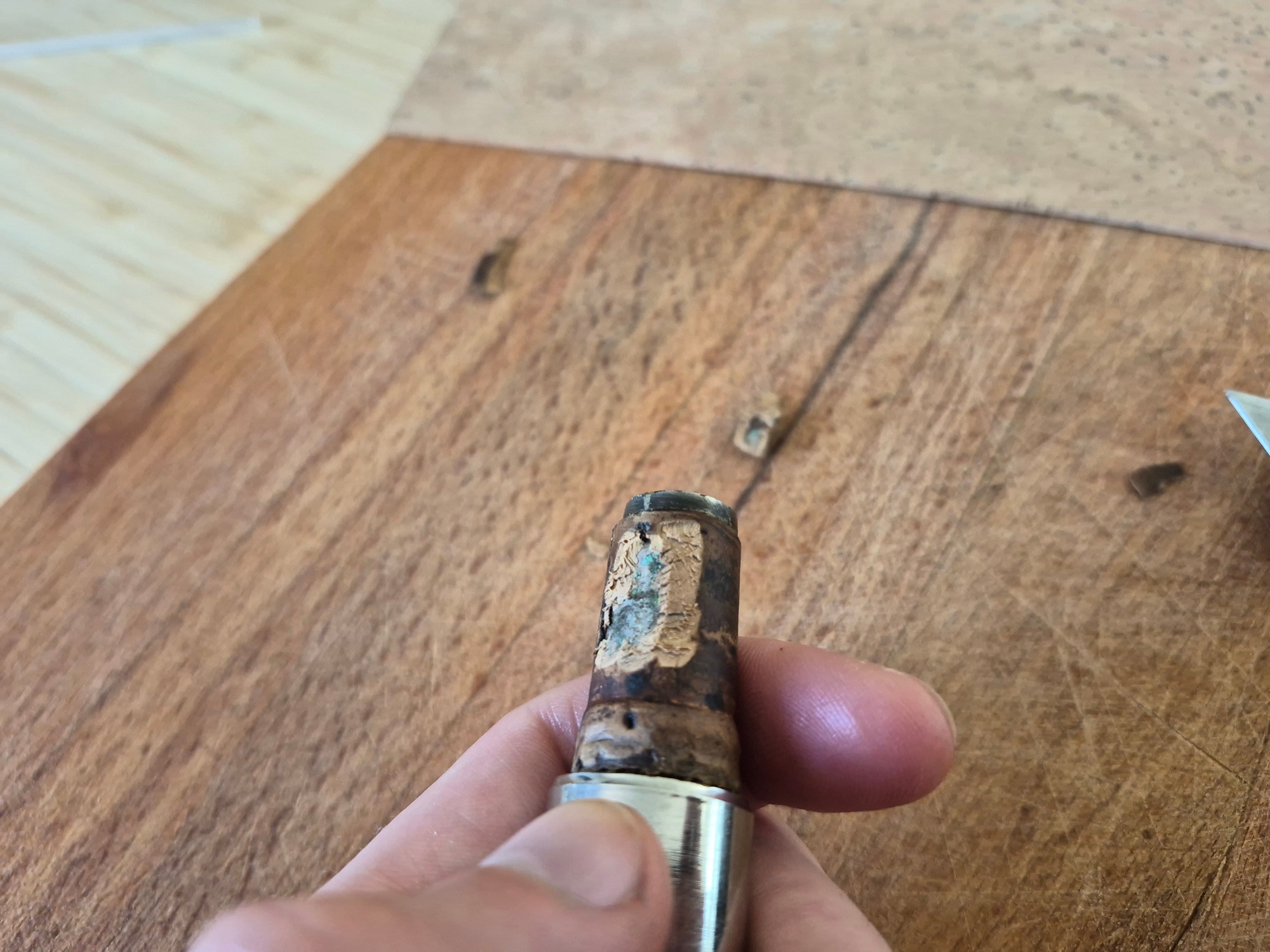
Once the cork was gone, I noticed a spot of verdigris underneath. This prompted another acetic acid bath and rinse, for the neckpipe this time. I cleaned up the remaining bits with the knife.
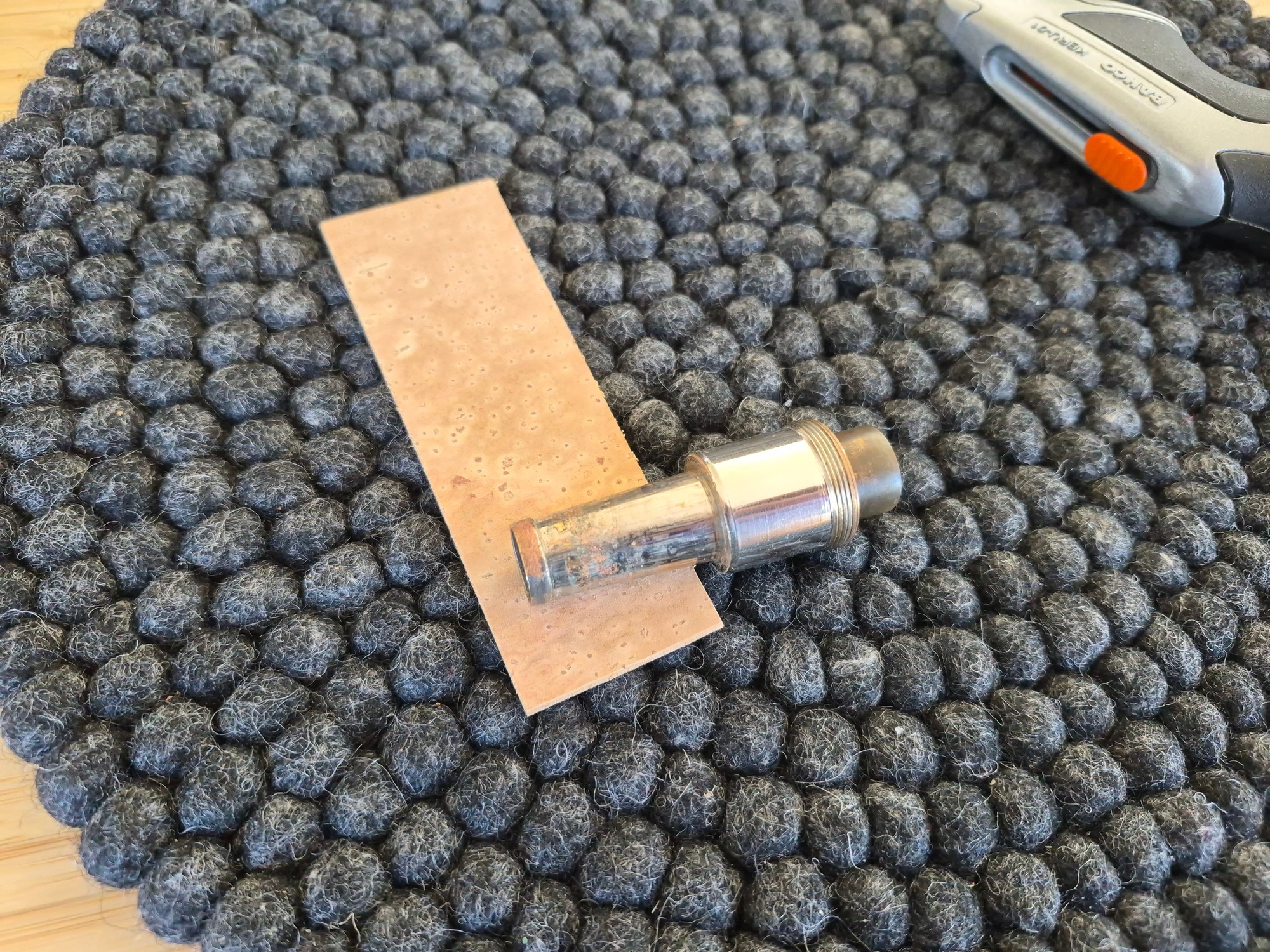
The length of the corked area measured 28 mm with a 3 mm piece of metal sticking out (an end-ring). The lower circumference measured approximately 57 mm, the upper — 49 mm. If I were to attempt wrapping a rectangle around the neck, it would become crooked, as the pipe is conical. To avoid that, I used the three measurements above to calculate the radius of a circle that forms the cone, which came out to approximately 196 mm.
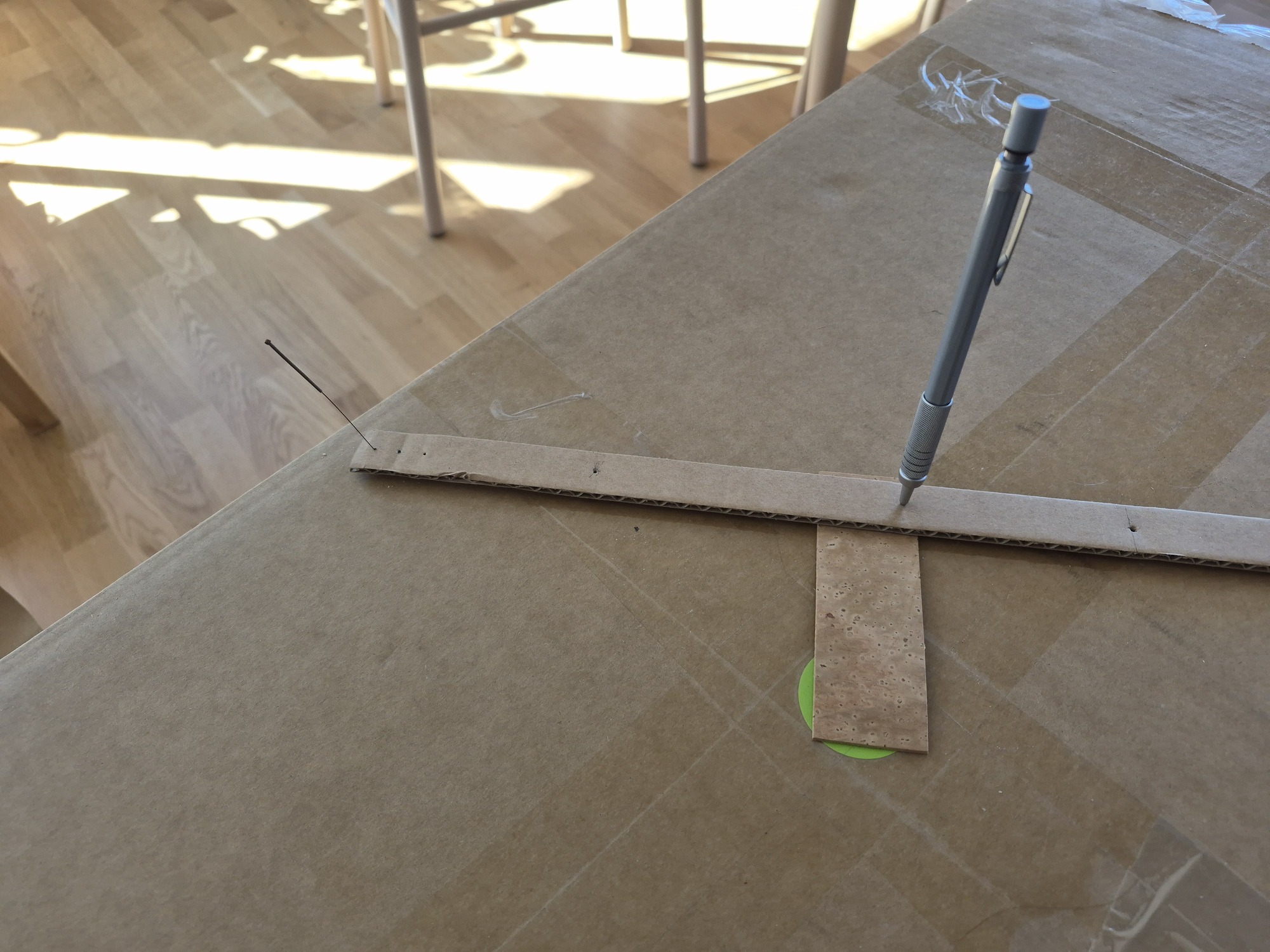
Using an improvised compass, I drew the arc along which to cut. I also angled the edge towards the centre of the circle for the seam to follow a straight line to the top of the neckpipe when wrapped, and then sanded that edge down.
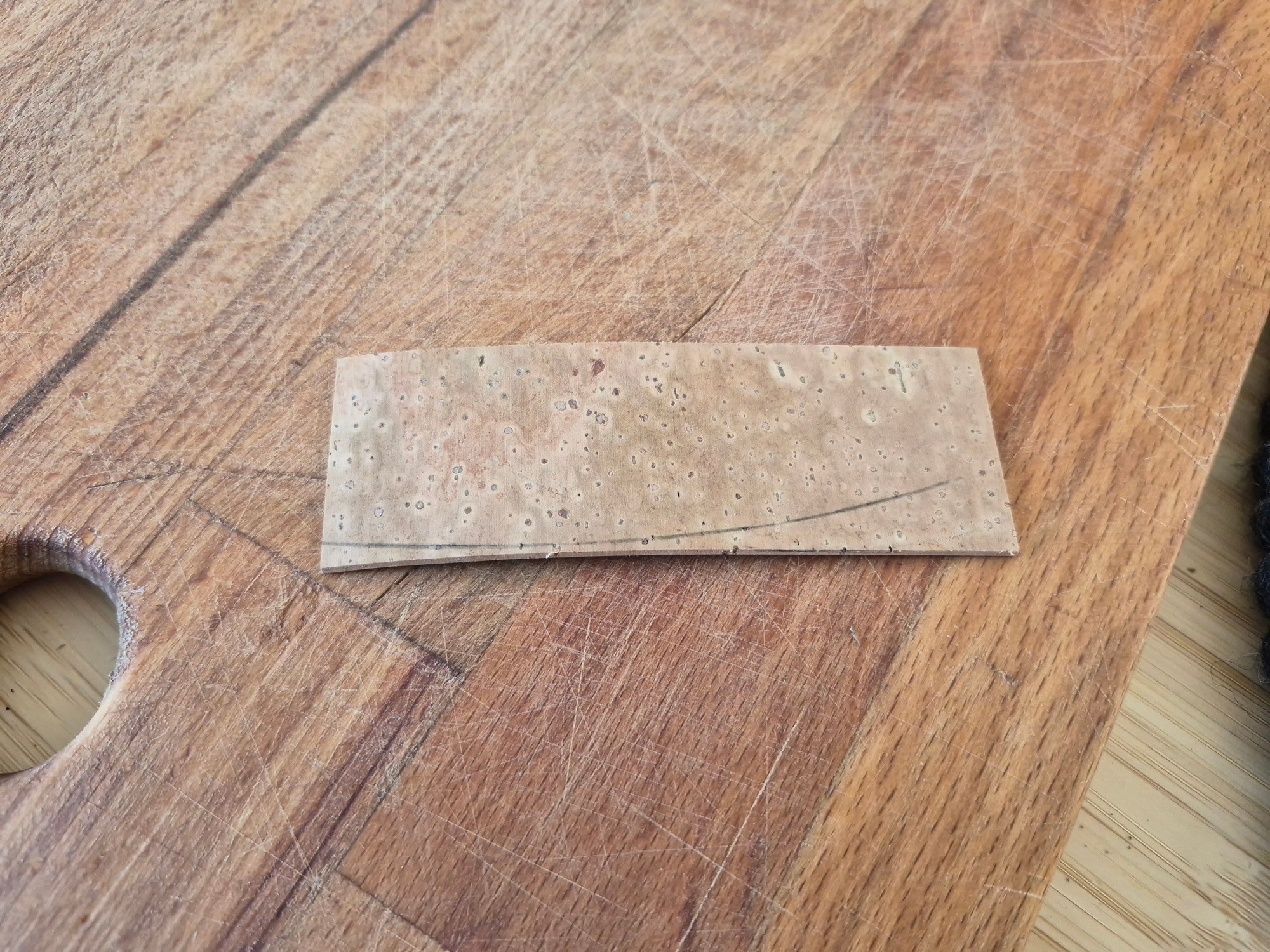
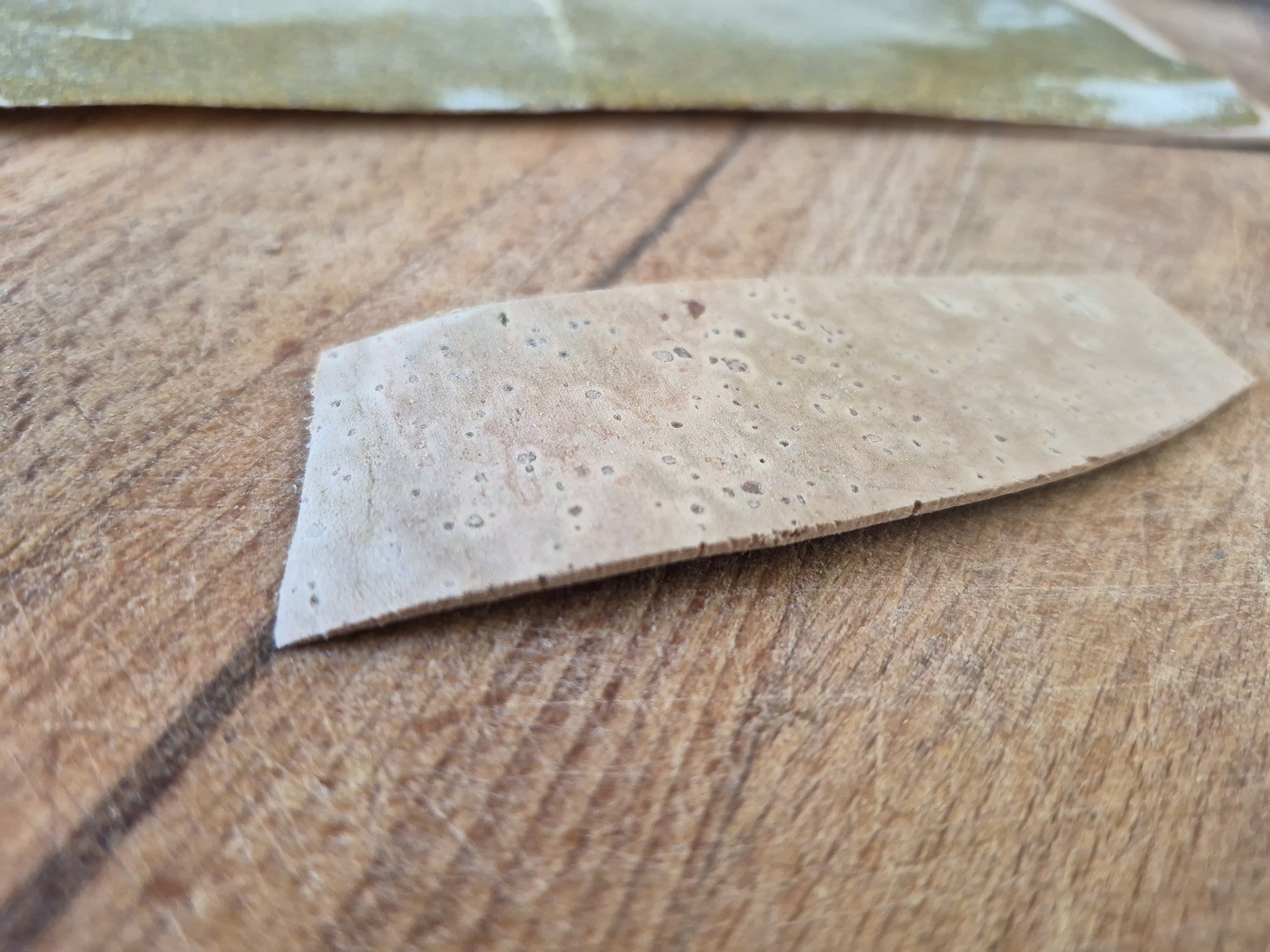
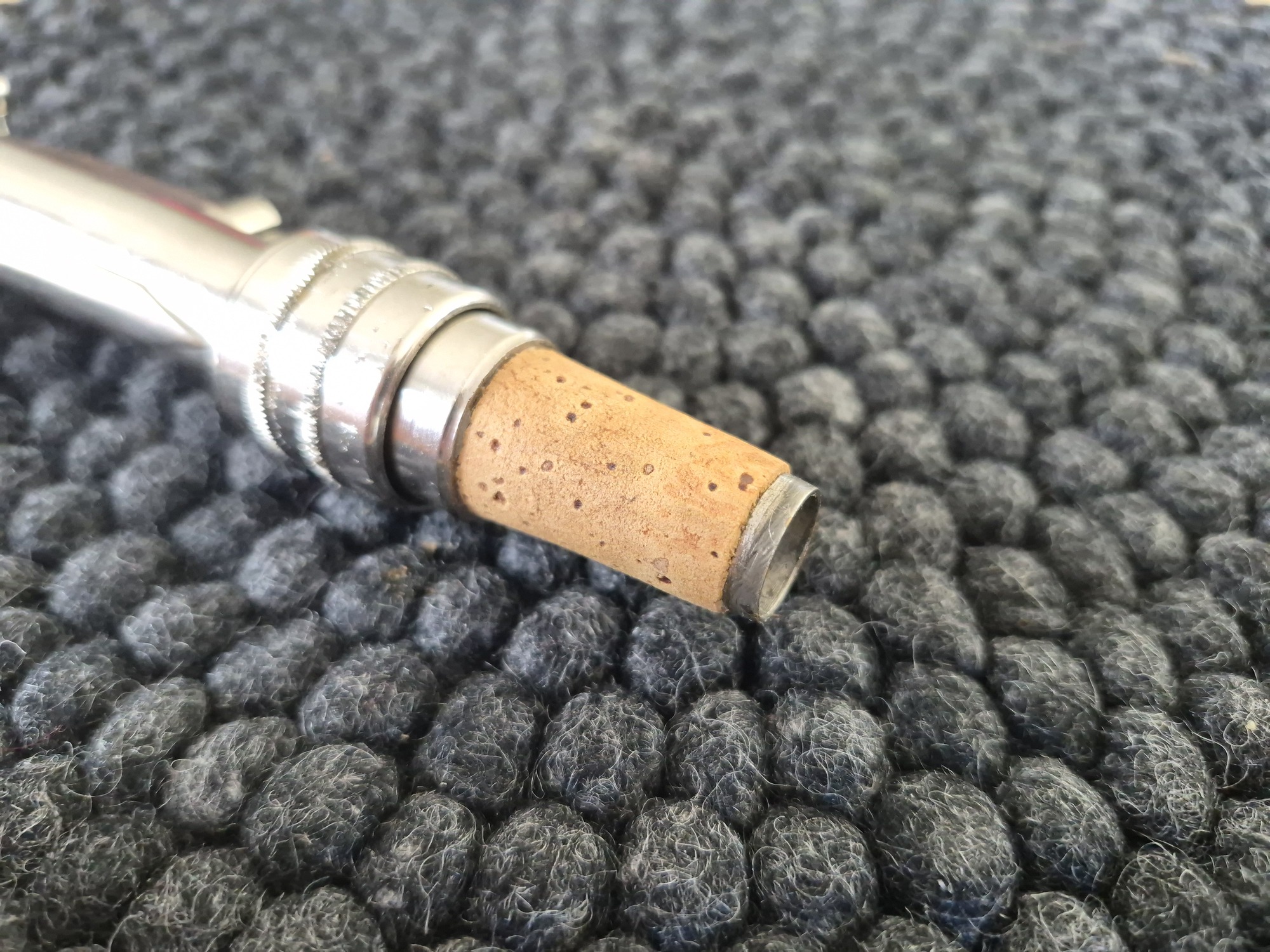
I applied the contact cement to both the cork and the neckpipe and left it to cure for 15 minutes. Afterward, I wrapped the cork around, cut off the excess and sanded it down until the mouthpiece could snuggly fit over the top third.
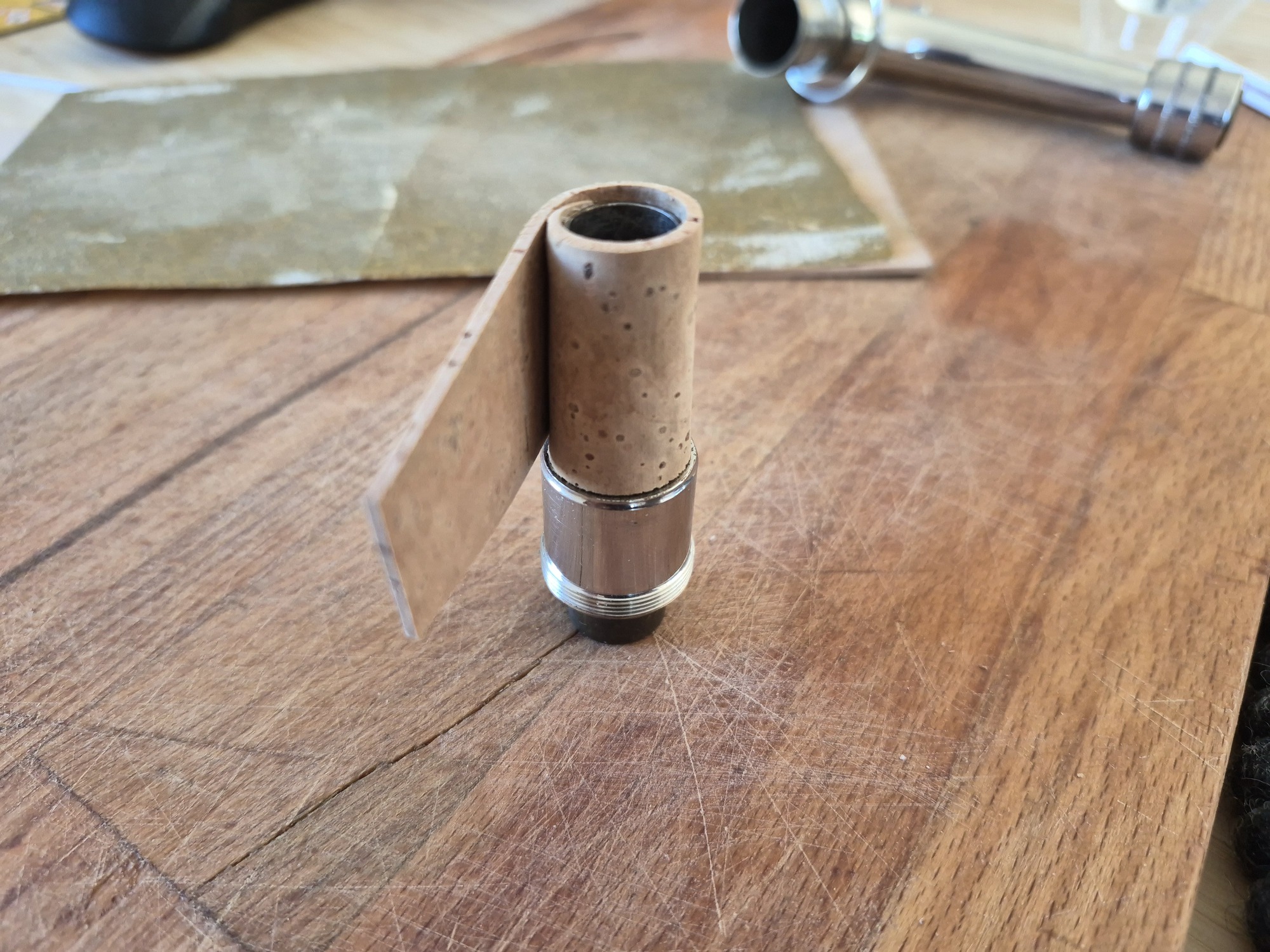
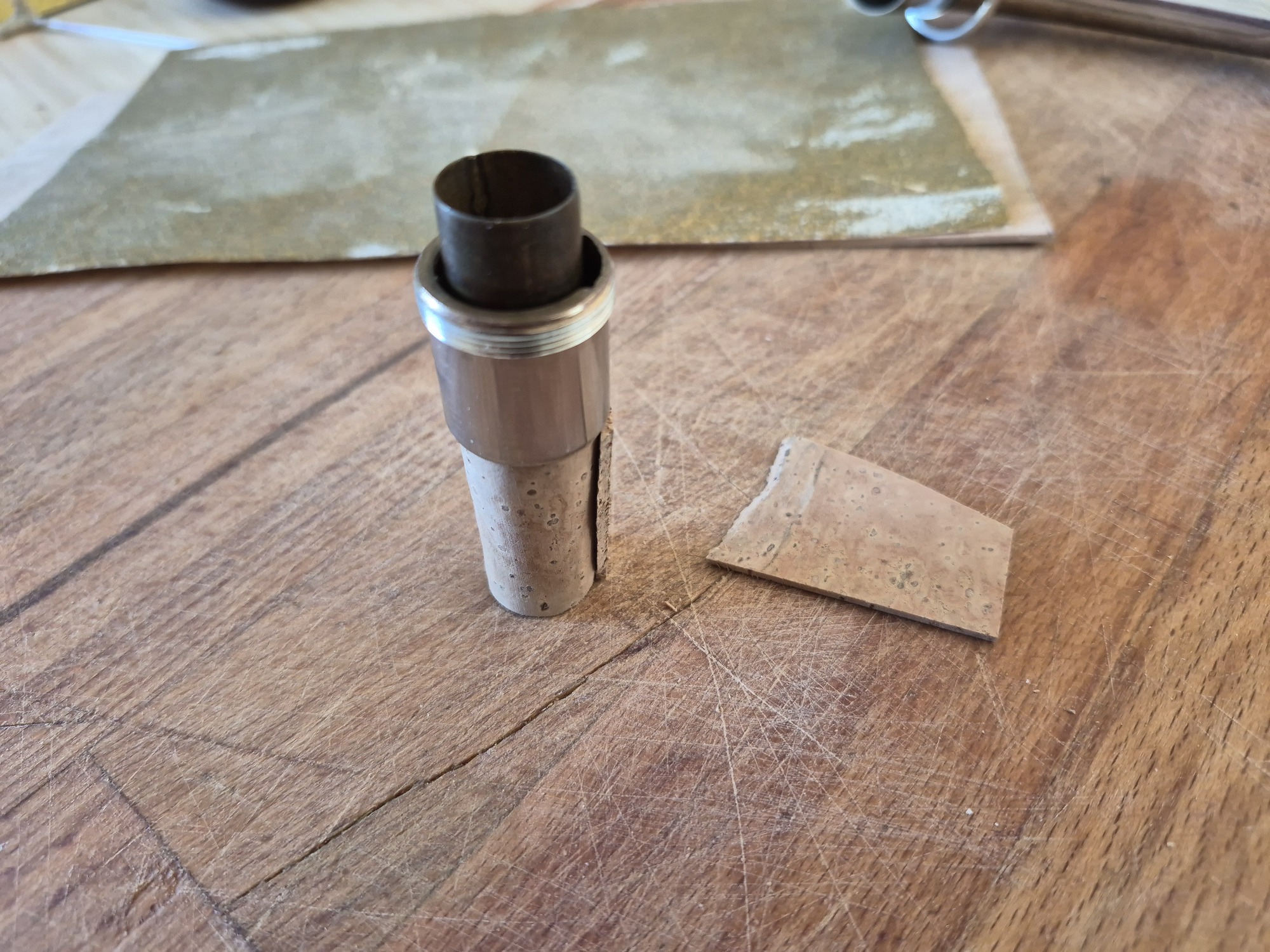
I greased it with the cork grease and reattached the neckpipe back to the neck.
Thanks to Stephen Howard for writing a guide on how to recork a neck.